System Design is the process of defining elements of a system like modules, architecture, components and their interfaces and data for a system based on the requirements specified by the end-user.
To design a system it should be Reliable, Available, Scalable and Maintainable. So we should have knowledge of what these terms are and how they impact our system in the long run.
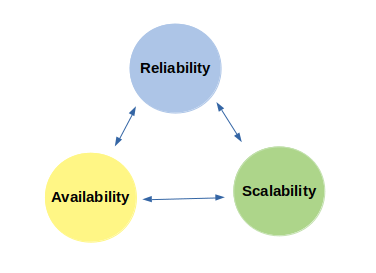
Reliability in System Design –
A system is Reliable when it can meet the end-user requirement. When you are designing a system you should have planned to implement a set of features and services in your system. If your system can serve all those features without wearing out then your System can be considered to be Reliable.
A Fault Tolerant system can be one that can continue to be functioning reliably even in the presence of faults. Faults are the errors that arise in a particular component of the system. An occurrence of fault doesn’t guarantee Failure of the System.
Failure is the state when the system is not able to perform as expected. It is no longer able to provide certain services to the end-users.
Availability in System Design –
Availability is a characteristic of a System which aims to ensure an agreed level of Operational Performance, also known as uptime. It is essential for a system to ensure high availability in order to serve the user’s requests.
The extent of Availability varies from system to system. Suppose you are designing a Social Media Application then high availability is not much of a need. A delay of a few seconds can be tolerated. Getting to view the post of your favorite celebrity on Instagram with a delay of 5 to 10 seconds will not be much of an issue. But if you are designing a system for hospitals, Data Centers, or Banking, then you should ensure that your system is highly available. Because a delay in the service can lead to a huge loss.
There are various principles you should follow in order to ensure the availability of your system :
- Your System should not have a Single Point of Failure. Basically, your system should not be dependent on a single service in order to process all of its requests. Because when that service fails then your entire system can be jeopardized and end up becoming unavailable.
- Detecting the Failure and resolving it at that point.
Scalability in System Design –
Scalability refers to the ability of the System to cope up with the increasing load. While designing the system you should keep in mind the load experienced by it. It’s said that if you have to design a system for load X then you should plan to design it for 10X and Test it for 100X. There can be a situation where your system can experience an increasing load. Suppose you are designing an E-commerce application then you can expect a spike in the load during a Flash Sale or when a new Product is Launched for sale. In that case, your system should be smart enough to handle the increasing load efficiently and that makes it Scalable.
In order to ensure scalability you should be able to compute the load that your system will experience. There are various factors that describe the Load on the System:
- Number of requests coming to your system for getting processed per day
- Number of Database calls made from your system
- Amount of Cache Hit or Miss requests to your system
- Users currently active on your system
 Umesh Chandra
Leave a comment