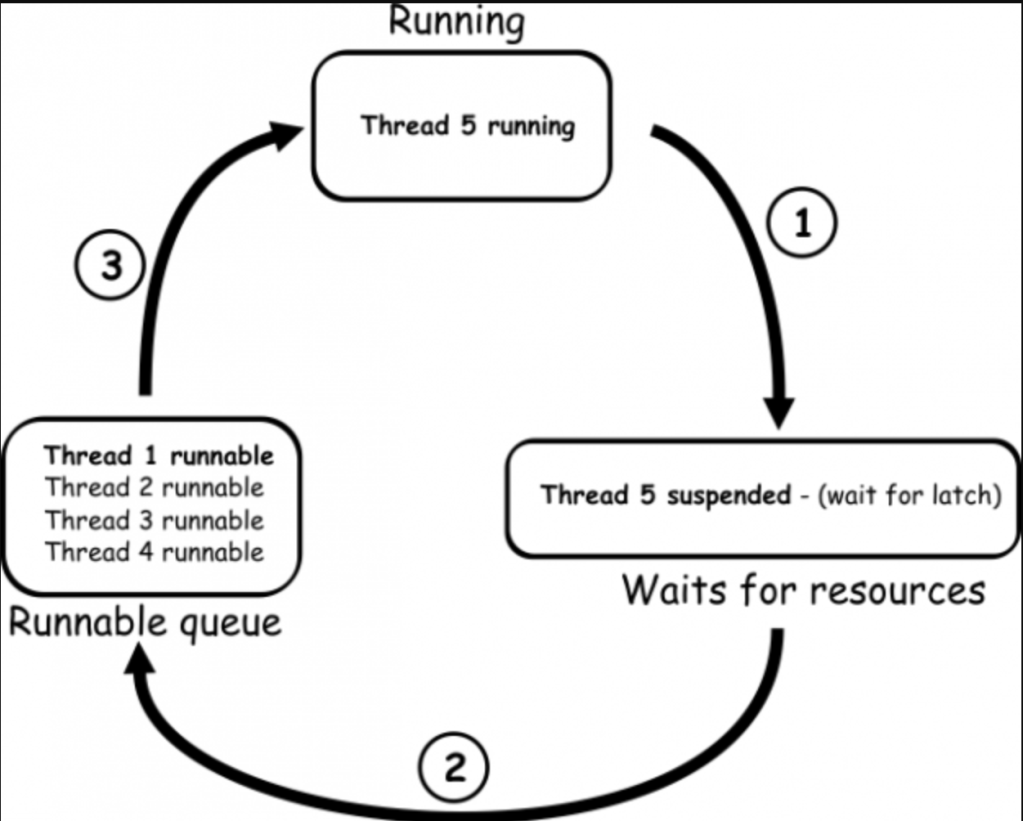
Introduction
- What is a Spin Lock ?
- Definition: A spinlock is a low-level synchronization mechanism in an operating system that protects shared resources from being accessed by multiple threads or processes at the same time.
- Purpose: Ensures that only one thread can access a critical section of code at a time.
How Spin Locks Work
Mechanism:
Imagine a door lock: just like only one person can enter a room at a time, a spinlock ensures only one thread can access a resource.
Instead of waiting patiently, a thread using a spinlock behaves like an eager person repeatedly checking the lock (“Is it available yet?”). This busy-waiting approach avoids thread pausing but can waste CPU cycles.(It is the drawback of spin lock)
Once acquired, the thread can safely access the shared resource, while other threads wait for the spinlock to become available again
- Busy-Waiting: A thread repeatedly checks a lock variable until it becomes available.
- Lock Acquisition: When the lock is free, the thread sets the lock and proceeds with its task.
- Lock Release: After the task is complete, the thread releases the lock for others to acquire.
Advantages of Spin Locks
- Efficiency in Short Critical Sections: Spin locks are effective when the critical section is short because they avoid the overhead of context switching.
- Low Latency: They provide low-latency access to the critical section, making them suitable for real-time systems.
Disadvantages of Spin Locks
- CPU Wastage: While spinning, the thread utilizes many CPU cycles, just for waiting for the resource, busy waiting can be inefficient because the looping procedure is a waste of computer resources. In addition, the system is left idle while waiting.
- Not Suitable for Long Wait Times: Inefficient for long critical sections or when the lock contention is high.
- A workaround solution for the inefficiency of busy waiting that is implemented in most operating systems is the use of a delay function. Also known as a sleep system call, a delay function places the process involved in busy waiting into an inactive state for a specified amount of time. In this case, resources are not wasted as the process is “asleep”. A delay function is illustrated below:
algorithm delay(process p, resource z):
    // INPUT
    //   p = Process that needs to be delayed
    //   z = Resource that the process is waiting for
    // OUTPUT
    //   Puts the process 'p' to sleep while resource 'z' is in use

    while z is still in use:
        p.sleep(900)
Use Cases:
1. Kernel Development:
Commonly used in kernel development for short-duration locks where sleeping is not feasible.
2. Multi-Processor Systems:
Effective in systems with multiple processors where threads are frequently checking for lock availability.
Alternatives to Spin Lock
- Mutexes: Provide better efficiency for long-duration locks by putting the thread to sleep instead of busy-waiting.
- Semaphore: Useful for signaling and controlling access to resources with more than one instance.
Conclusion:
- Summary: Spin locks are powerful synchronization tools with specific use cases in operating systems. They provide low-latency access but can lead to CPU wastage if not used appropriately.
- Future Trends: Evolution of synchronization mechanisms continues, aiming for more efficient and flexible locking strategies.
| Feature | Spin Lock |
|---|---|
| CPU Efficiency | Low (busy-wait) |
| Use Case | Short sections |
| Latency | Low |
References:
- Silberschatz, A., Galvin, P. B., & Gagne, G. (2018). Operating System Concepts (10th ed.). John Wiley & Sons
- Baeldung. (2023). Busy Waiting in Operating Systems.
 Umesh Chandra
Leave a comment