Analytics can be defined as “the scientific process of transforming data into insights for making better decisions”
Of course, without data or without doing analytics also we can make decisions. But we cannot make better decisions without analytics.
Analytics, is the use of data, information technology, statistical analysis, quantitative methods and mathematical or computer-based model to help managers gain improved insight about their business operations and make better, fact-based decisions.
Why Analytics is important ?
Opportunity abounds for the use of analytics and big data such as:
- Determining credit risk
- Developing new medicines
- Finding more efficient ways to deliver products and services
- Preventing frauds
- Uncovering Cyber threats
- Retaining the most valuable customers
Data Analysis
Data Analysis is the process of examining, transforming, and arranging raw data in a specific way to generate useful information from it.
Data Analysis allows for the evaluation of data through analytical and logical reasoning to lead to some sort of outcome or conclusion in some context
Data Analysis is a multi-faceted process that involves a number of steps, approaches and diverse techniqueys
Data Analytics vs Data Analysis
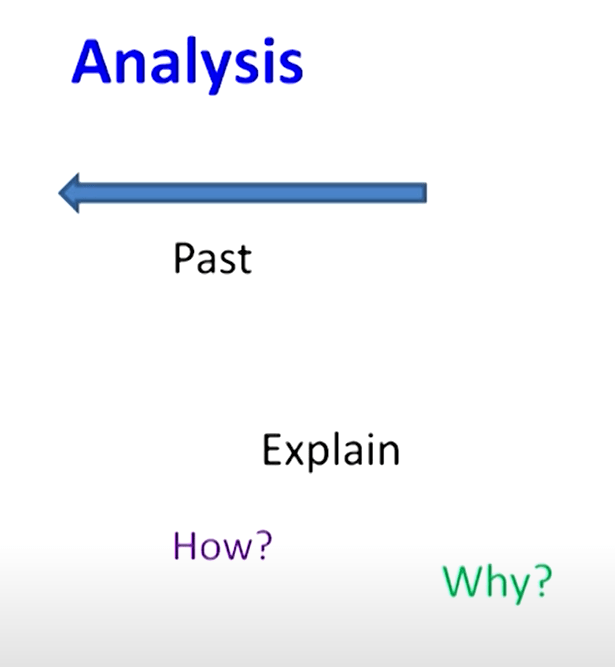
When we say data analysis, it is something that happened in the past.
Based on that analysis
we can explain why that has happened ?
we can explain how it has happened?
we can explain why it has happened?
In the contrary Analytics is what will happen in future and with the help of analytics we can predict, explore possible potential future events.

So the Analytics can be qualitative or quantitative.
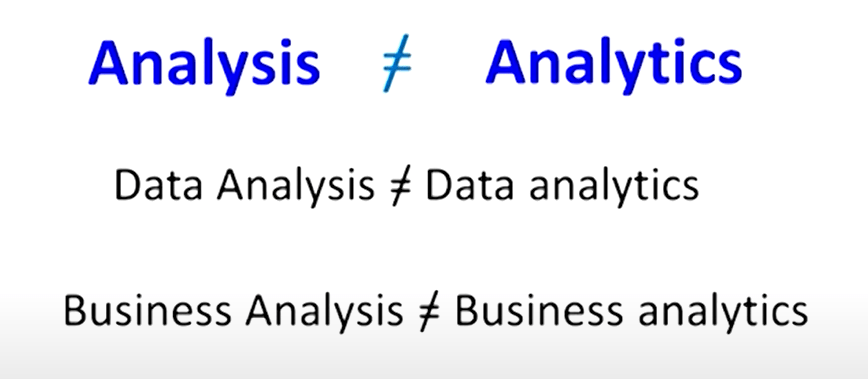
The one thing we can conclude is that Analysis is not same as Analytics
Classification of Data Analytics
Based on the phase of workflow and the kind of analysis required, there are four major types of data analytics.
- Descriptive analytics
- Diagnostic analytics
- Predictive analytics
- Prescriptive analytics
Descriptive analytics says about what was happened ?
Diagnostic analytics says about why did it happened ?
Predictive analytics says about what will happen ?
Prescriptive analytics says about how to make it happen ?
Descriptive Analytics
- Descriptive Analytics, is the conventional form of Business Intelligence and data analysis
- It seeks to provide a depiction or “summary view” of facts and figures in an understandable format
- This either inform or prepare data for further analysis
- Descriptive analysis or statistics can summarize raw data and convert it into a form that can be easily understood by humans
- They can describe in detail about an event that has occurred in the past
Example:
A common example of Descriptive Analytics are company reports that simply provide a historic review like:
- Data Queries
- Reports
- Descriptive Statistics
- Data Visualization
- Data dashboard
Diagnostic Analytics
- Diagnostic Analytics is a form of advanced analytics which examines data or content to answer the question “Why did it happen?”
- Diagnostic analytical tools aid an analyst to dig deeper into an issue so that they can arrive at the source of a problem
- In a structured business environment, tools for both descriptive and diagnostic analytics go parallel
Example:
It uses techniques such as:
- Data Discovery
- Data Mining
- Correlations
Predictive Analytics
- Predictive analytics helps to forecast trends based on the current events
- Predicting the probability of an event happening in future or estimating the accurate time it will happen can all be determined with the help of predictive analytical models
- Many different but co-dependent variables are analysed to predict a trend in this type of analysis
Example:
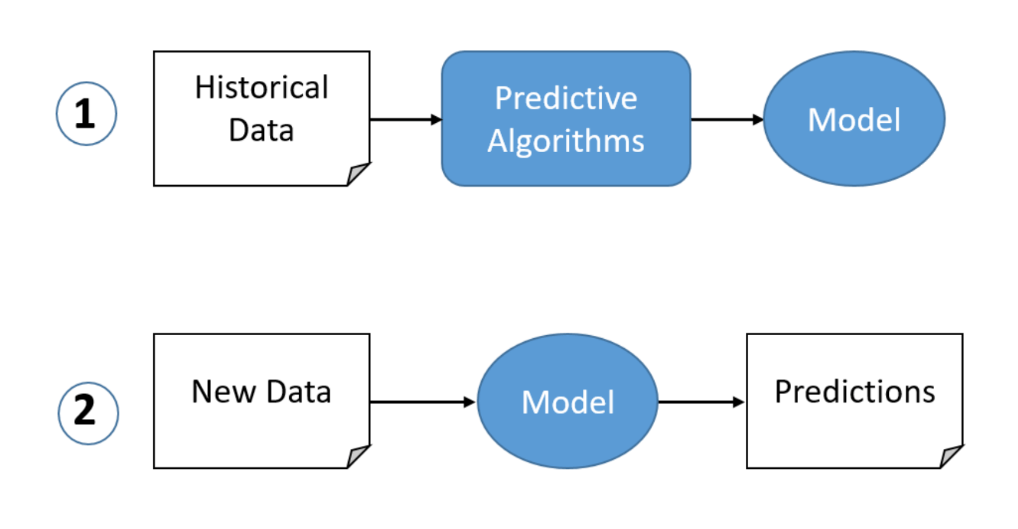
Set of techniques that use model constructed from past data to predict the future or ascertain impact of one variable on another:
- Linear regression
- Time series analysis and forecasting
- Data mining
Prescriptive Analytics
- Set of techniques to indicate the best course of action
- It tells what decision to make to optimize the outcome
- The goal of prescriptive analytics is to enable:
- Quality improvements
- Service enhancements
- Cost reductions and
- Increasing productivity
Example:
- Optimization Model
- Simulation
- Decision Analysis


Leave a Reply